
Composite Deck Fastening Systems: Screws, Hidden Fasteners, and Plug Systems
Why Deck Fasteners Matter
When homeowners plan a composite deck, most of the focus goes to color, railing, or layout.
But one detail that makes a big difference is how the deck boards are fastened.
Fasteners affect:
How clean the deck surface looks
How well boards stay aligned over time
How easy repairs are if a board ever needs to be replaced
Most composite and PVC decks use one or more of three fastening methods:
Composite deck screws
Hidden fasteners
Plug systems
Each method has advantages, and many well-built decks use a combination of them.
Composite Deck Screws
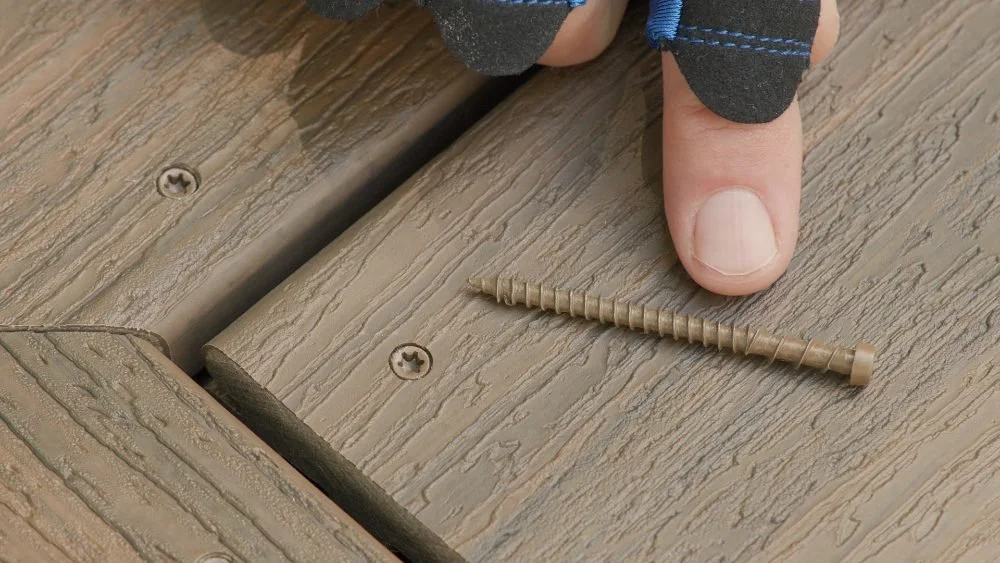
Color Matched Composite Deck Screw
Composite deck screws fasten boards directly through the face of the board into the framing below.
They are different from standard wood deck screws. Wood deck screws use a large bugle-shaped head designed for wood. When used on composite decking, that head shape can push material upward and cause mushrooming around the screw.
Composite deck screws typically use a smaller trim-style head, usually around a quarter inch wide, with a domed shape and a sharp cutting edge underneath. This edge cuts the composite material and pulls it down into the hole, leaving a cleaner finish.
Many composite screws also include reverse threads under the head, which help cut the material as the screw seats and reduce mushrooming.
Coated vs Stainless Steel Screws
Most composite screws are made from hardened steel and protected with zinc plating and a polymer, epoxy, or ceramic coating.
These coatings provide good corrosion resistance for most decks. However, if the coating is damaged during installation, the underlying steel can eventually corrode.
For decks near saltwater or where maximum longevity is important, stainless steel composite deck screws are often preferred.
Where Face Screws Are Used
Even when hidden fasteners are used for most of the deck, composite screws are still required in certain areas:
Board ends
Picture-frame borders
Stairs
Any location where hidden clips cannot be used
These screws help hold boards firmly in place and reduce movement over time.
Hidden Deck Fasteners
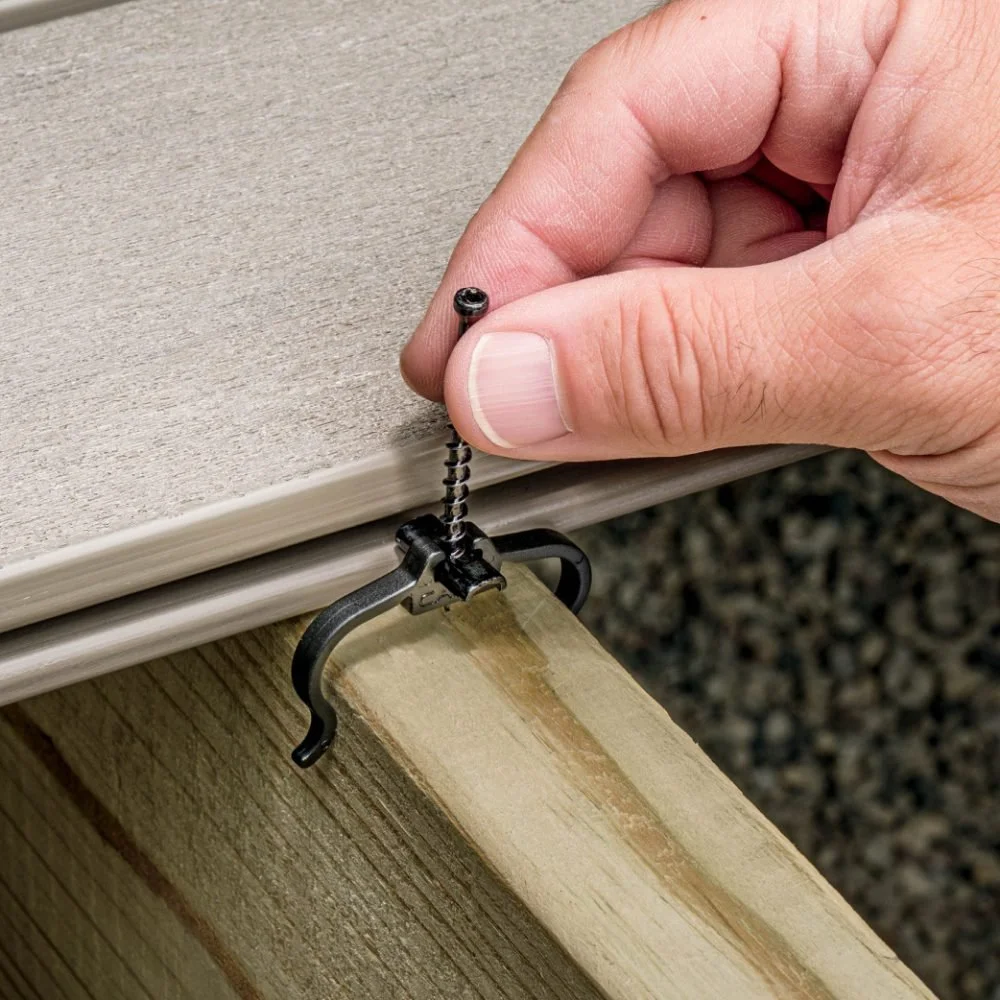
Camo Edge Clip - our preferred hidden fastening system
Hidden fasteners attach boards from the side groove instead of through the surface of the deck.
A clip sits between the boards, and a screw secures the clip to the joist. This leaves the deck surface free of visible screws.
Hidden fasteners are also much faster to install than face screwing an entire deck.
Built-In Board Spacing
Many hidden fastener systems automatically create spacing between boards.
For example, some clip systems create a 3/16-inch gap between boards, which keeps spacing consistent across the deck without the installer needing to adjust each board manually.
Strength and Board Movement
Hidden fasteners hold boards differently than face screws.
The clips grip the inside edges of grooved boards, and when tightened the screw pulls the boards tight to the framing. However, the clips do not directly restrain lateral movement of the boards. Instead, they rely mostly on friction.
Because of this, hidden fasteners are generally less effective at restraining board movement than face screws.
Composite and PVC decking expand and contract with temperature changes, and that movement is often greatest near the ends of the boards. In some cases, the clip screw at the board end can shear where it meets the joist, allowing the board to lift slightly.
Why Builders Add Screws at Board Ends
Hidden fasteners are still installed at board ends according to manufacturer instructions.
However, some builders also add two face screws at the ends of boards. This helps restrain movement and reduces stress on the clip screws during seasonal expansion and contraction.
Corrosion Resistance
Many hidden fastener systems use 304 stainless steel screws, which provide excellent corrosion resistance.
Face screwing an entire deck with stainless composite screws would typically cost two to three times more in hardware alone, in addition to the extra labor required.
Plugged Fastening Systems
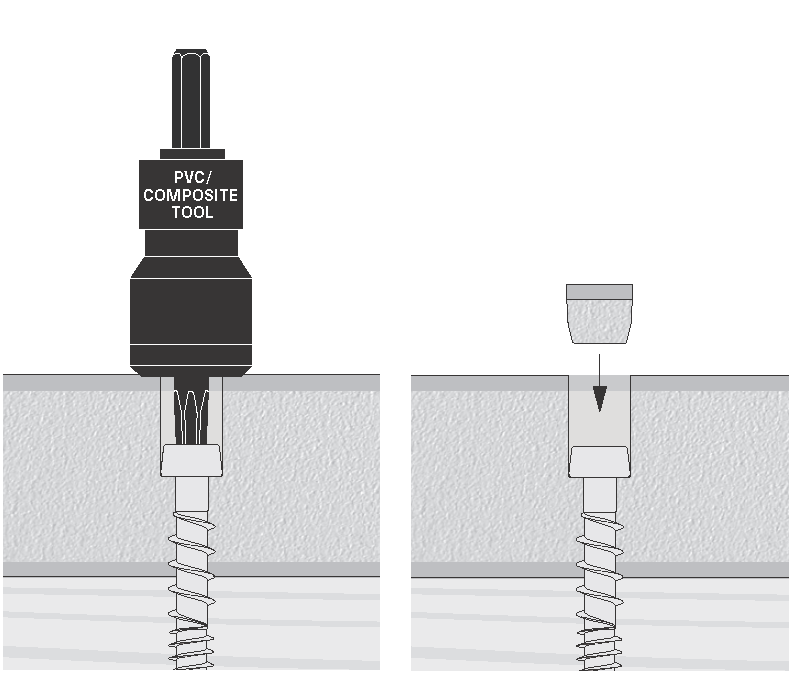
Plugged Screw Diagram
Plug systems combine the strength of face screws with a cleaner appearance.
With this method, composite deck screws are driven slightly below the surface of the board. A matching plug made from the same decking material is then inserted to hide the screw.
Once installed, the plug blends into the board and is much less noticeable than a visible screw head.
How Plug Systems Work
Plug systems use composite deck screws installed with a depth-setting tool. This tool drives the screw below the surface and creates a ¼-inch hole for the plug.
To install the plug:
Align the grain of the plug with the deck board
Insert the plug into the hole
Tap it flush using a rubber mallet
Glue is usually not needed because the plugs are designed to stay in place through friction.
Best Practices
The hole should be clean and mostly dry before inserting the plug. If debris or water collects in the hole, it should be cleaned out first.
In rare cases, trapped water can freeze and push the plug upward. Installing plugs soon after the screws are driven helps prevent this issue.
Decking Compatibility
Plug systems are most common with full-thickness composite or PVC boards, which have enough material to countersink the screw and install the plug.
Some manufacturers now offer plug systems for certain scalloped composite boards as well. For example, Trex has introduced plug systems for parts of their scalloped decking lineup.
However, compatibility is still more limited, so the specific decking product should always be checked.
Choosing the Right Fastening System
Homeowners often ask whether hidden fasteners or deck screws are better.
The reality is that each system has advantages.
Face screws provide the strongest direct hold-down and make board replacement easier.
Hidden fasteners create the cleanest deck surface and install much faster.
Plug systems provide the strength of face screws with a cleaner appearance, but they require more labor.
Because of this, many well-built decks use a combination of fastening methods:
Hidden fasteners across the main field of the deck
Plug systems or color-matched screws where face fastening is required
This approach balances appearance, strength, installation time, and cost.
Final Thoughts
Deck fasteners may seem like a small detail, but they have a big impact on how a deck performs.
They influence how the deck looks, how boards move over time, and how easy future repairs will be.
Most builders end up using a combination of fastening systems for optimal performance, with hidden fasteners across the main boards and color-matched or plugged composite deck screws used where clips don’t work.
Choosing the right fastening method helps ensure the deck looks clean when it’s built and continues to perform well for many years.
